About SUM4Products
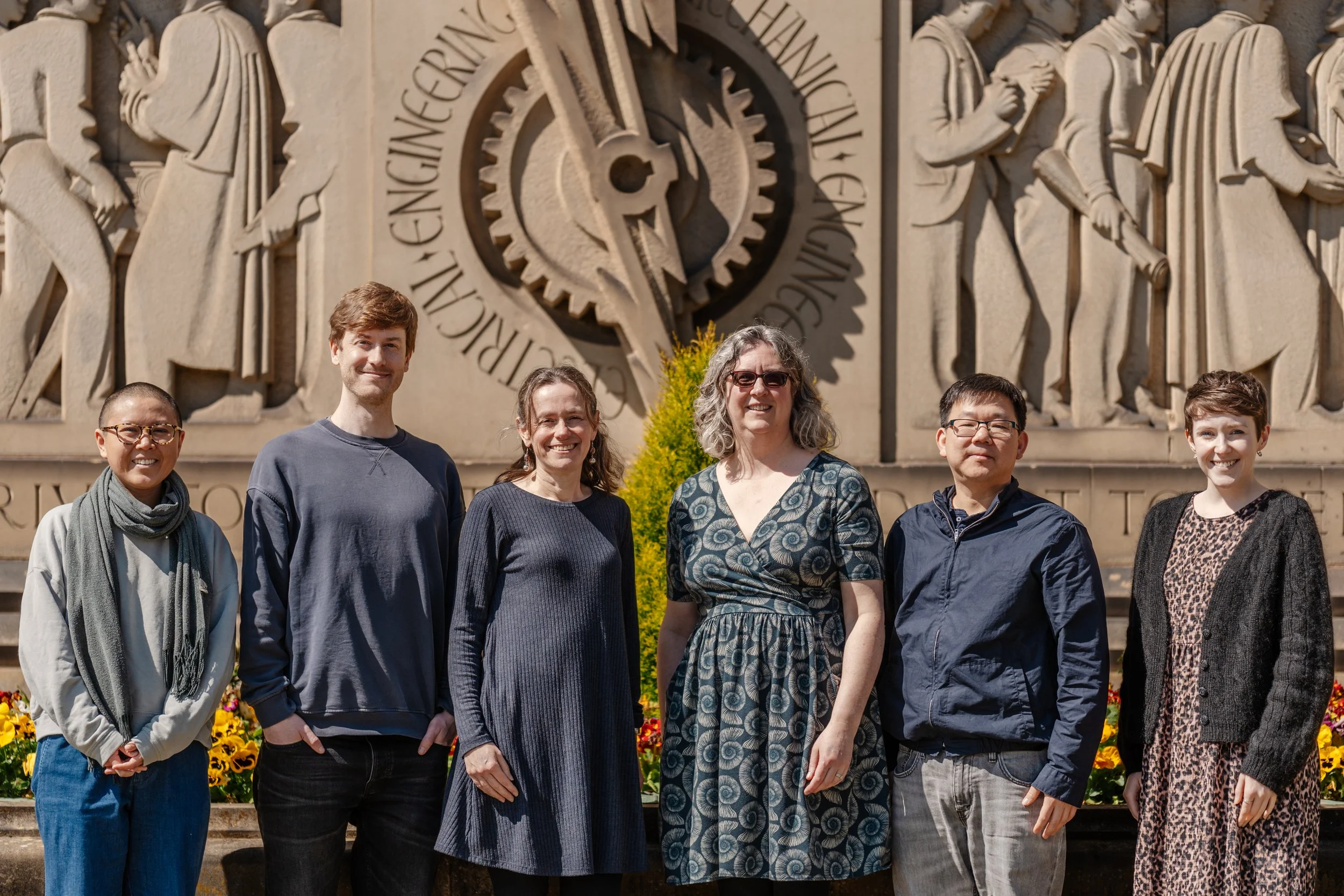
SUM4Products (Scale Up Mathematics for Formulated Products) is an EPSRC-funded UK network for advancing the use of mathematics in formulation engineering.
Our central aim is to drive innovation in formulation science and engineering by facilitating a sustainable, multi-disciplinary network with applied mathematics at its heart.
Why maths and formulated products?
-
The formulated product sector influences many aspects of everyday life. For example, the sector is responsible for producing food and drink, personal-care products, cosmetics, washing and cleaning products, and medicines. Due to the wide scope of the formulations sector, it contributes a staggering £142bn (GVA) to the UK economy each year.
-
In response to societal changes, there is a growing shift in the sector towards the rapid development of smarter, greener, and more personalised products. This includes:
Developing high-quality, nutritious, and sustainable foods that reduce fat and sugar use without compromising the flavour and texture profiles demanded by consumers.
The rapid formulation of medicines, therapeutics, and foods to provide cost-effective and personalised products to different age/health groups, e.g. creating personalised nutrition for diabetics.
Reformulation of existing products to incorporate new ingredients in response to regulatory changes or shortages, or to avoid degradation due to time in storage.
-
Innovation is limited by lengthy and expensive development cycles that rely on experimental trial-and-error.
Moreover, the science behind formulated products is complex and under-developed, and advancements require expertise that spans multiple disciplines.
To make matters worse, there is a lack of knowledge exchange across different application areas, leading to duplicated efforts and unsolved problems.
-
Despite their variety, companies across the sector face shared challenges in processing, engineering and performance. Mathematics is the key to unlocking innovation and addressing these complexities.
They all require new, predictive models that can link the processing and microstructure of formulated products to their final function and performance.
Multi-scale mathematical methods applied to fluid and solid mechanics, and heat and mass transfer are the ideal foundation to build such models.
What are our goals?
-
We are here to accelerate innovation in the UK formulated products sector
-
We will enable progress through collaboration, shared expertise and cross-cutting research
-
We are putting maths at the centre of solving sector-wide formulation challenges.
-
We connect academics from multiple disciplines, including engineering, computer science, physics, chemistry, and biology with with industrial organisations of all sizes, from SMEs to global brands.
Our areas of interest
At the heart of the SUM4Products vision is a mathematics-driven approach to problem solving. By drawing on areas such as fluid and solid mechanics, heat and mass transfer, and multi-scale methods, the network aims to develop predictive modelling capabilities that will unlock innovation across the sector.
A key goal is to open the doors to engineering the taste, feel, and texture of formulated products by varying individual ingredients or processing parameters, with limited need for trial-and-error experiments. The network is currently focussing on three broad research themes identified through consultation with industry partners:
-
Most formulated products are complex multiphase, multicomponent mixtures whose lifecycle is driven by heat and mass transfer processes coupled to chemical reactions. These processes occur across disparate length and time scales as the formulation goes from production to shelf and finally to consumer use.
-
Across the sector, there is critical need to predict how the microstructure of materials manifests in macroscopic response and function. Linking microstructure to macrostructure requires the development of multi-scale mathematical and computational approaches, potentially using homogenisation or machine-learning methods. This will lead to a better capability to predict the impact of replacing one ingredient with another, e.g. to obtain optimal behaviour, to minimise waste during processing, or in response to a regulatory change or change in supplier.
-
What matters most to industry partners is the sensory perception of their customers. A chocolate manufacturer will want to know if their chocolate tastes bitter; a deodorant manufacturer will want to know if their deodorant feels wet or sticky. The overarching challenge is to complement or eventually replace subjective measures, such as consumer group surveys, with quantitative measures linking microstructure transformation and heat and mass transfer to perception.
What do we offer?
SUM4Products webinar
Hear more from the SUM4Products team.
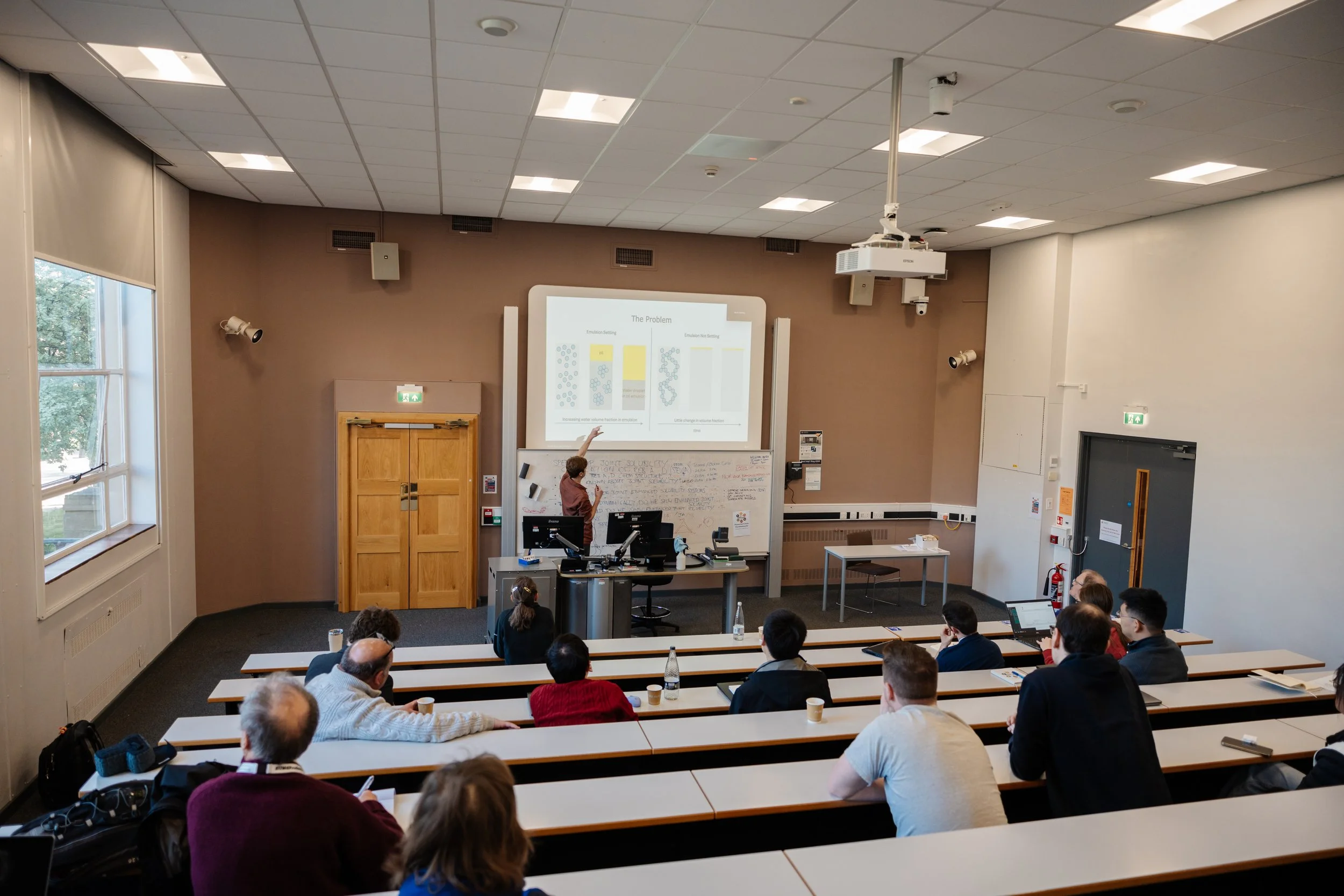
Watch this webinar to learn how your organisation can access fully funded or low-cost research support through SUM4Products, a £2.8M EPSRC-funded UK network for advancing the use of mathematics in formulation engineering. We connect academics from multiple disciplines with industrial partners from companies of all sizes, from micro-SMEs to multi-nationals.
Collaborating with SUM4Products